Don’t never ask me to close my eyes and make peace with dark.
I been runnin since before my mama give me life
The rain.
cold
Cold enough to make my teeth sing.
Skirt torn.
Blood mixin with the wet in what’s left of my shoes.
I keep one hand over my mouth because the sound of my breath gone bring them men
chasin behind me. The kind of men who to do what they please with a negro woman
caught runnin in the woods. The sound of their dogs hot on my trail. The hooves of horses
beatin war drums against wet earth.
Lanterns.
Swingin like they done bottled little suns, searching the shadows for the property, the cattle that done run off.
Ain’t it funny how they call that light safe.
When everything I have left in me is fighting to stay out of its gaze.
I make myself small beneath the trees.
Smaller than the name they took from my mama.
Smaller than what aches between my legs.
Smaller than the hunger that pulsates almost as loud as my heart doing backflips inside my chest.
I quiet them both.
Auntie gave me a sweet thing,
Tiny like a mustard seed, wrapped tight in a piece of rag torn from the hem of her dress.
I put it on my tongue and let it sit. Let it melt.
This little piece of sweet is all the mercy the
lord done gave me tonight. Not even a mouthful of sugar.
A scrap of dark.
A few more minutes before the light come nearer.
The dark ain’t empty.
Its full.
It’s full of black bodies holding breath.
It’s full of girls melting into shadow so them men with lamps can’t drag them back into the
world.
It’s full of mothers erasing any trace of footprint so her babies can’t be followed.
It’s full of the sound breath makes
when it chooses
between
death and freedom.
So no, I do not fear the dark.
I fear the light that travels on hands that believe that my life ain’t worth nothin but a body
in the field.
Context for this piece
This piece emerged from a nighttime walk in the woods during my first residency with The Gramounce in Amsterdam, where I was the only participant of African-American lineage. Our conversation explored darkness, fear, safety, and the use of artificial light as an instrument of colonial power and social control. It also examined the meanings assigned to light and dark: black as dirty, impure, threatening; white as clean, innocent, good. There was discussion of light as a promised refuge, and of the ways illumination might instead expose women to danger. The conversation was intended to be inclusive, but its European frame left me feeling profoundly outside it.
I was listening to people question these associations while feeling their weight against my own Black body. What could be discussed as an idea was, for me, inseparable from lineage. I thought of my ancestors escaping enslavement under cover of night, of a distant lantern announcing not rescue but the possibility of capture, rape, or death. I imagined the sound of horses, a body crouched beneath branches, the effort of swallowing a breath so it would not betray a hiding place. When the rain began, I cried silently.
No one noticed. Beneath the canopy, we were then invited to eat a tiny bite of something sweet as a meditation on presence and the self in darkness. In my mouth, that sweetness became the little food I imagined someone carrying in torn cloth, rationed against hunger on a journey with no assurance of arrival. I could not separate the exercise from those imagined bodies, or settle into the reflection it invited.
This piece speaks through a young woman I imagined running toward freedom. She doesis not a claim to know precisely what my ancestors felt. She is the voice through which I could approach the grief and terror the experience opened in me. The night exposed a painful limit of inclusion: we can occupy the same space, hear the same words, and still find that the terms of the conversation leave some of us alone.
A note on language and inclusion
I want to name another form of otherness here: the expectation that a contribution must arrive in what an institution recogniszes as “proper English” before it can be received as knowledge. I question an inclusion that welcomes my presence but requires my voice to be corrected into familiarity.
My cadence, vernacular, and ways of carrying memory are not obstacles to the thought. They are part of how the thought takes shape. I want academic spaces to make room for precision without mistaking it for conformity, and for difficult knowledge without requiring the speaker to strip away the language that gives it life. The responsibility to be understood cannot belong only to the person already being made other. It must also belong to those listening.
This article is a contribution from one of the participants of The Gramounce Food & Art Alternative MA 2026-28. Their writing is inspired by one of our residencies and responds to their interest in food & art.
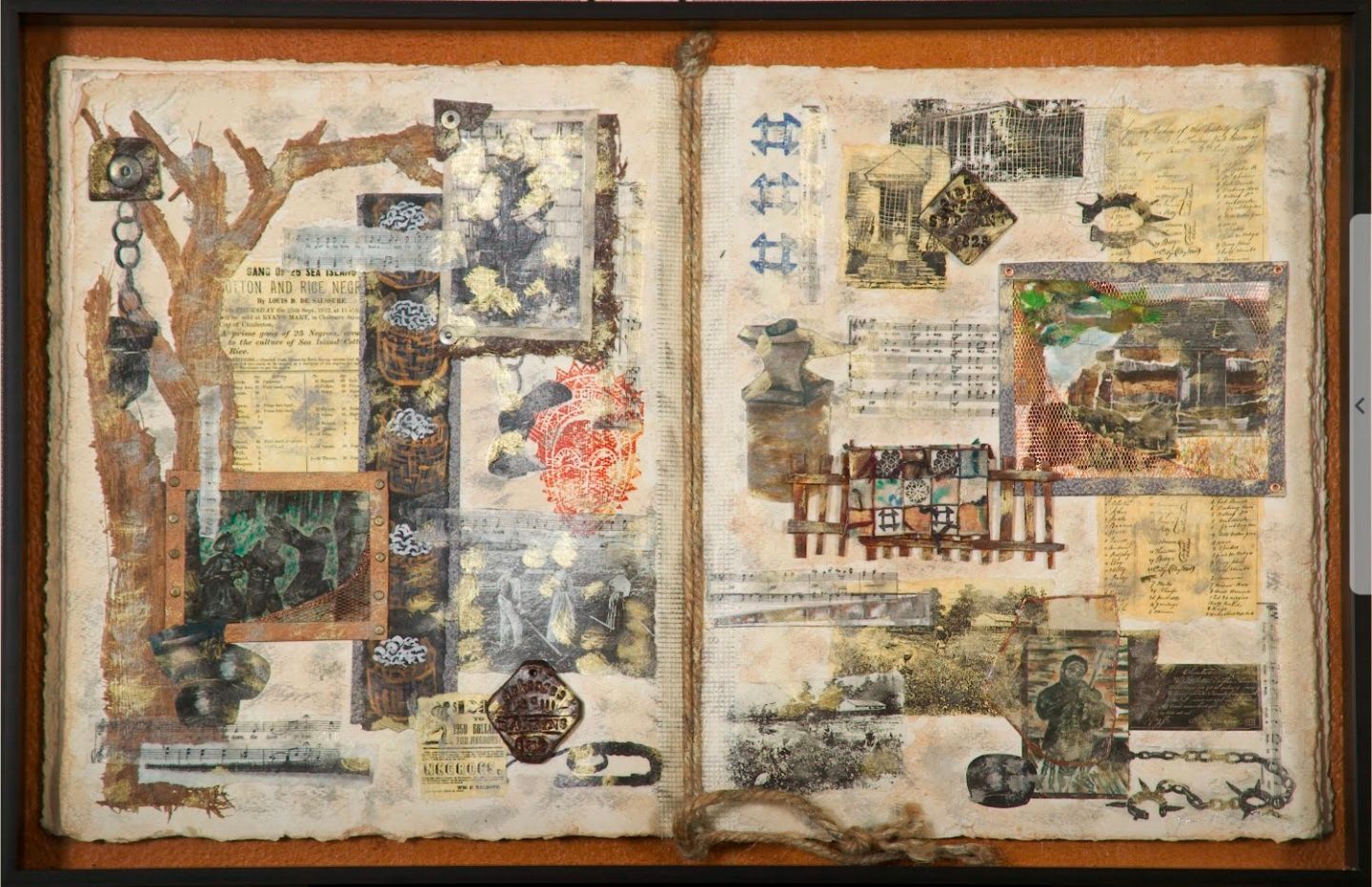
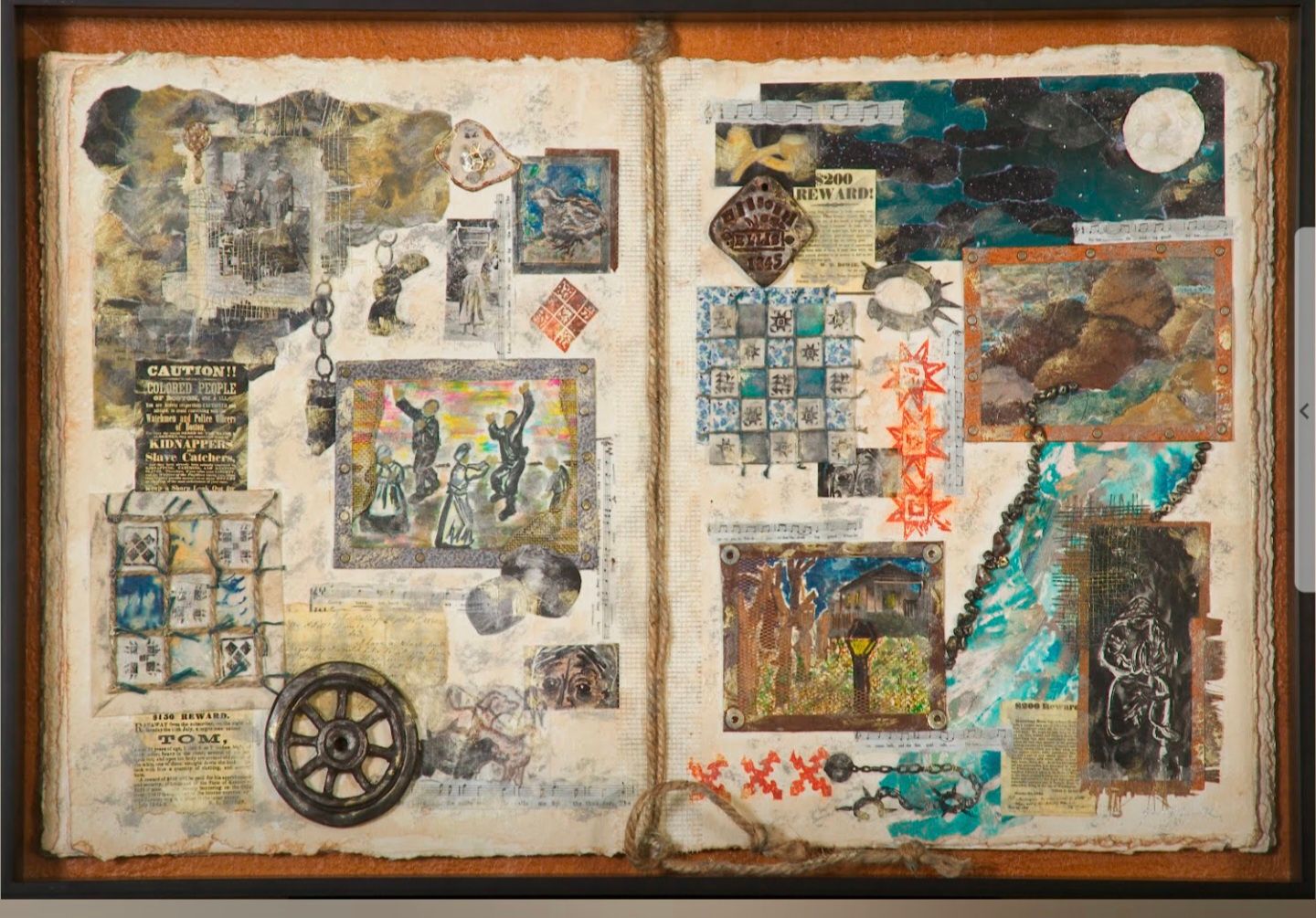
Artworks by Yvonne Lamar-Rogers, 'Long Journey Home,' part of the artist book 'Rock & Roll Hall of Fame'. Exhibited in 'Rock My Soul: The Black Legacy of Rock and Roll' (2003).
This work explores the significance of music during the antebellum era (the time of slavery). Inspired by negro spirituals that were encoded with instructions for escape under the cover of night. It was a part of a greater exhibition tracing the Black Legacy of rock and roll from Africa to hip hop, where each of the 10 artists was given an era of music to interpret.
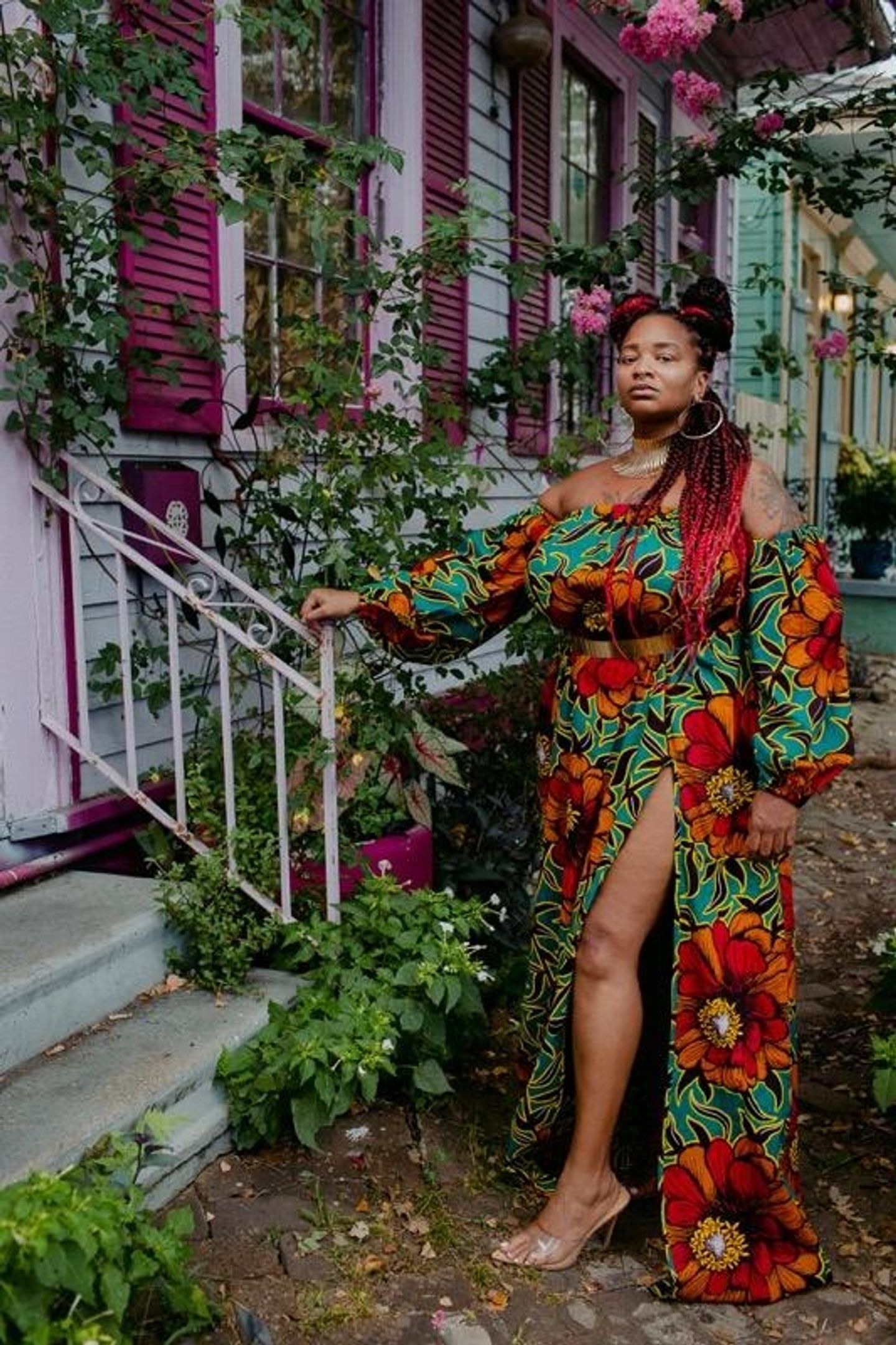
Maya Mastersson is a chef, culinary historian, writer, and transdisciplinary artist whose practice moves between food, memory, ecology, and the body. Rooted in African American experience and the foodways of New Orleans and the Gulf South, her work asks how history lives in what we eat, what we inherit, and what we struggle to name. Through meals, writing, performance, and visual art, she explores ancestry, survival, belonging, and freedom. Her engagement with Afrofuturism brings ancestral knowledge into conversation with speculative futures. She draws on over twenty years of professional cooking to imagine possibilities for nourishment, cultural continuity, and collective liberation ( @blackrouxculinarycollective ).