Conviviality is contradiction. It is not a horizontal and peaceful cohabitation, but a “living with” based on negotiation with others. To live and work materially—or rather, to produce—is a negotiation. A negotiation of needs, of power, of everything. To be convivial is to be urgent and intimate and in conflict. Through conviviality, encounters become sites for emergence: a lively spiral of relations and negotiations that could take place over lunch. The result is a dialectic that describes and embraces contradictions while offering a way through and beyond them. In my own practice, I see this convivial method and the questions it raises as a spiraling upward and outward of material and theory, seeking an ever-more-lively practice of relation to the material world and its infinitely sublime ecologies and agencies.
As a core method in my own work and practice, I propose conviviality as a way to understand the potential of food—and by extension, practices that use food—as a way to incorporate and account for difference, conflict, and contradiction. Eating does not enact a nice, clean, horizontal conviviality or an idealised planetary metabolism. And so, I reject the generic claim that “food brings people together”. Instead, in this proposition, conviviality is not the administration of an idealised and balanced spreadsheet of inputs and outputs, but rather an assembly of difference; a difference of scales, of needs, of power, and so on.
Conviviality is itself a linguistic artifact which benefits from an etymological dissection, reducible to the Latin ‘con-’ (with) and ‘vivere’ (live), and with roots in the Latin ‘convivium’ (feast). Through this dissection, ‘conviviality’ newly becomes “living-with”. ‘Conviviality’, thus, satisfies a knee-jerk propensity to resort to etymology as a kind of historical compression or shorthand for the passing of time and its proportional accumulations. I channel this impulse into a narrative approach, which insists that everything can be treated as a sublime artifact or diorama of its constitutive relations. Where the smallest word can sublimely embody all of human history without a proportional accumulation of material. In this way, everything becomes alive and historical at the same time.
I have always been struck by the relative unpopularity and flattening of ‘conviviality’ in quotidian English. While it can of course describe explicitly gastronomic relations and dynamics, it is also borrowed to describe worlds beyond the gastronomic as it is attended to across disciplines, sometimes materially and sometimes metaphorically. A “convivium” in ecology, for example, refers to a geographically isolated population within a species, while in a political and social context “conviviality” is used to describe the post-colonial and metropolitan condition of living with alterity. In other words, there is a cache of beautiful and thoughtful work with conviviality at its center for those with the patience to sift through the rest of it.
I am suspicious of the latest revival of interest in conviviality in artistic and academic circles, which seems to be rooted in an understandable, if not utopian, fantasy of living together while often inefficiently grappling with the inherent contradictions in doing so. Under a world order that increasingly promotes the autonomy of the individual at the expense of the collective while food access and quality become increasingly unevenly distributed, this relegation of the convivial to academic and cultural spheres is telling. An idealised conviviality then moves further and further out of reach, and what remains is conviviality as it has always been: an assembly of interpenetrating relations between very hungry, living things.
In the kitchen, this collective convivial subject is simultaneously defined by mutual dependence, conflict, and contradiction. What can be overlooked in this ongoing, so-called convivial renaissance is the universal and, at times, brutal contradiction of a life as both eater and eaten. This contradiction offers us a daily opportunity to reinvent our collective circumstances and to wield conviviality, or ‘living with’, as a method of collaborative production: a spiralling emergence upwards and outwards.
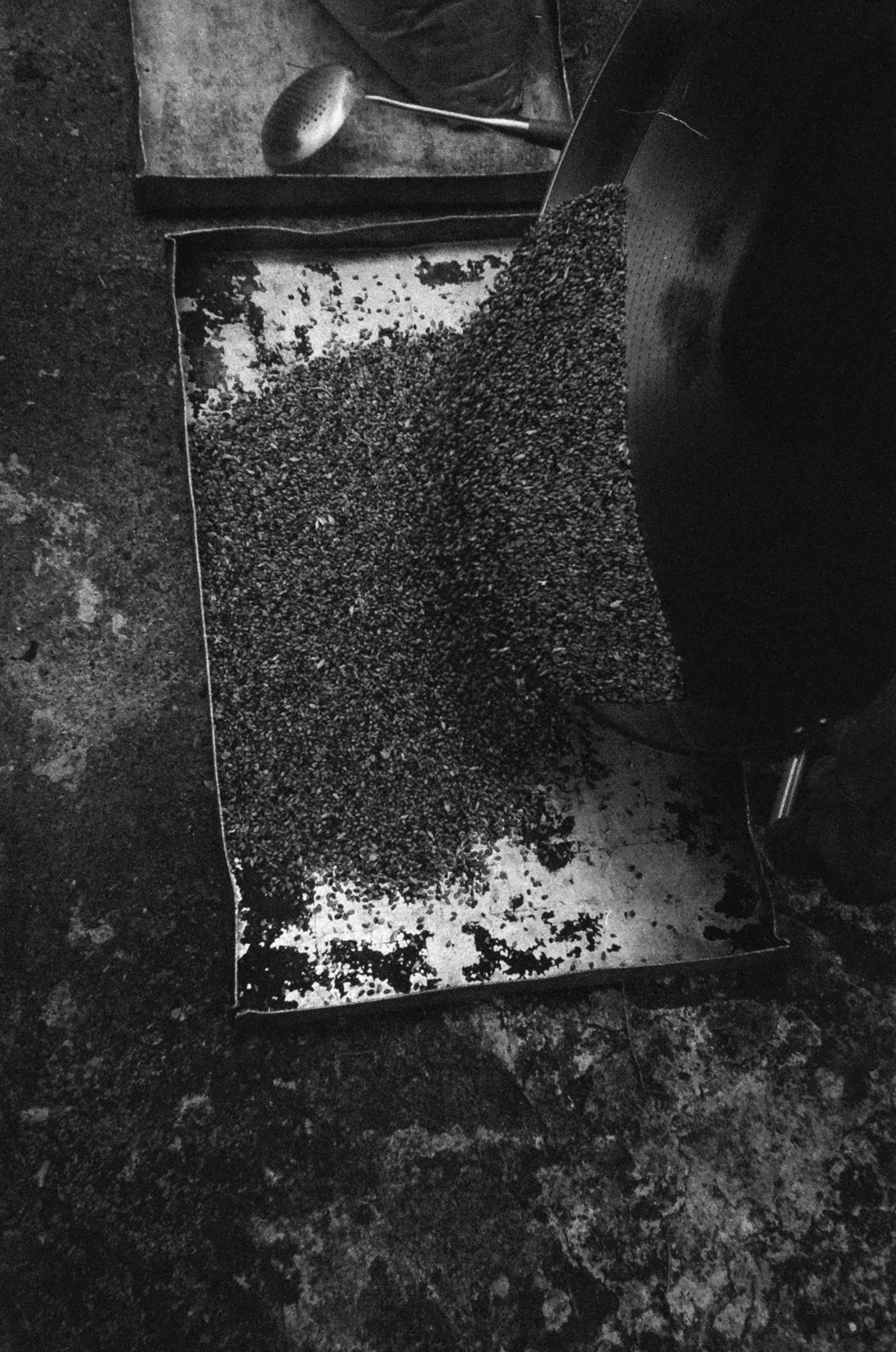
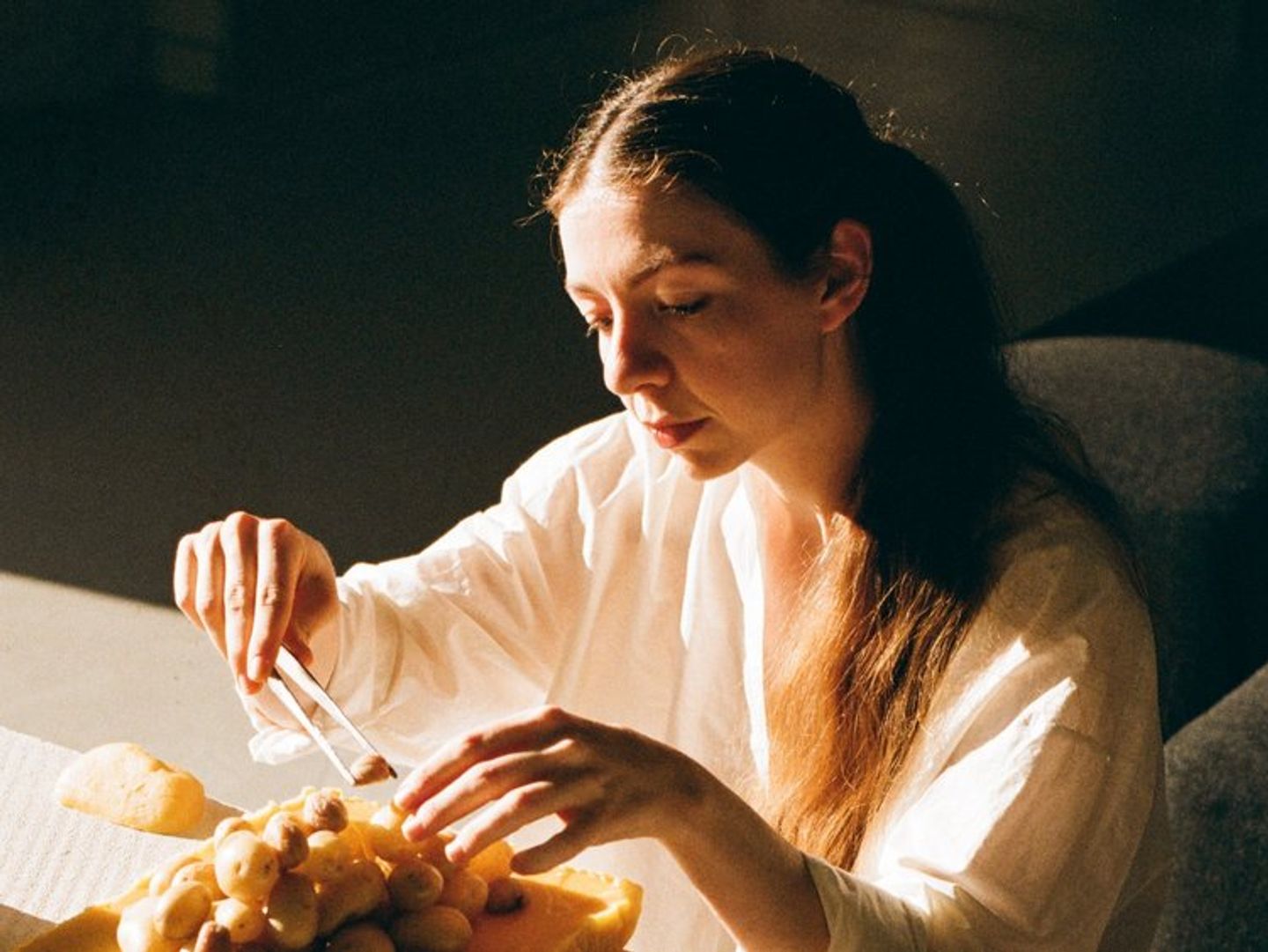
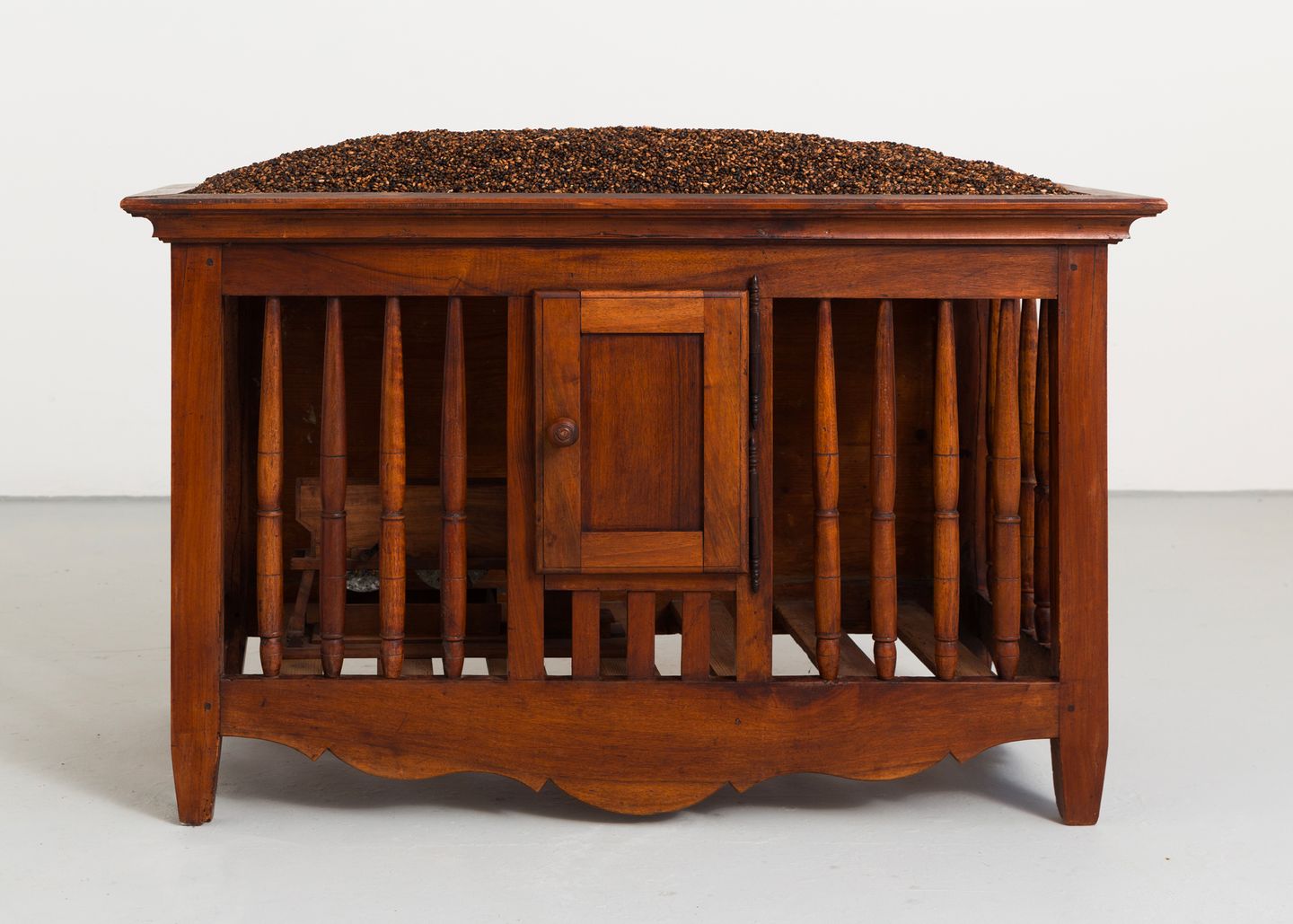
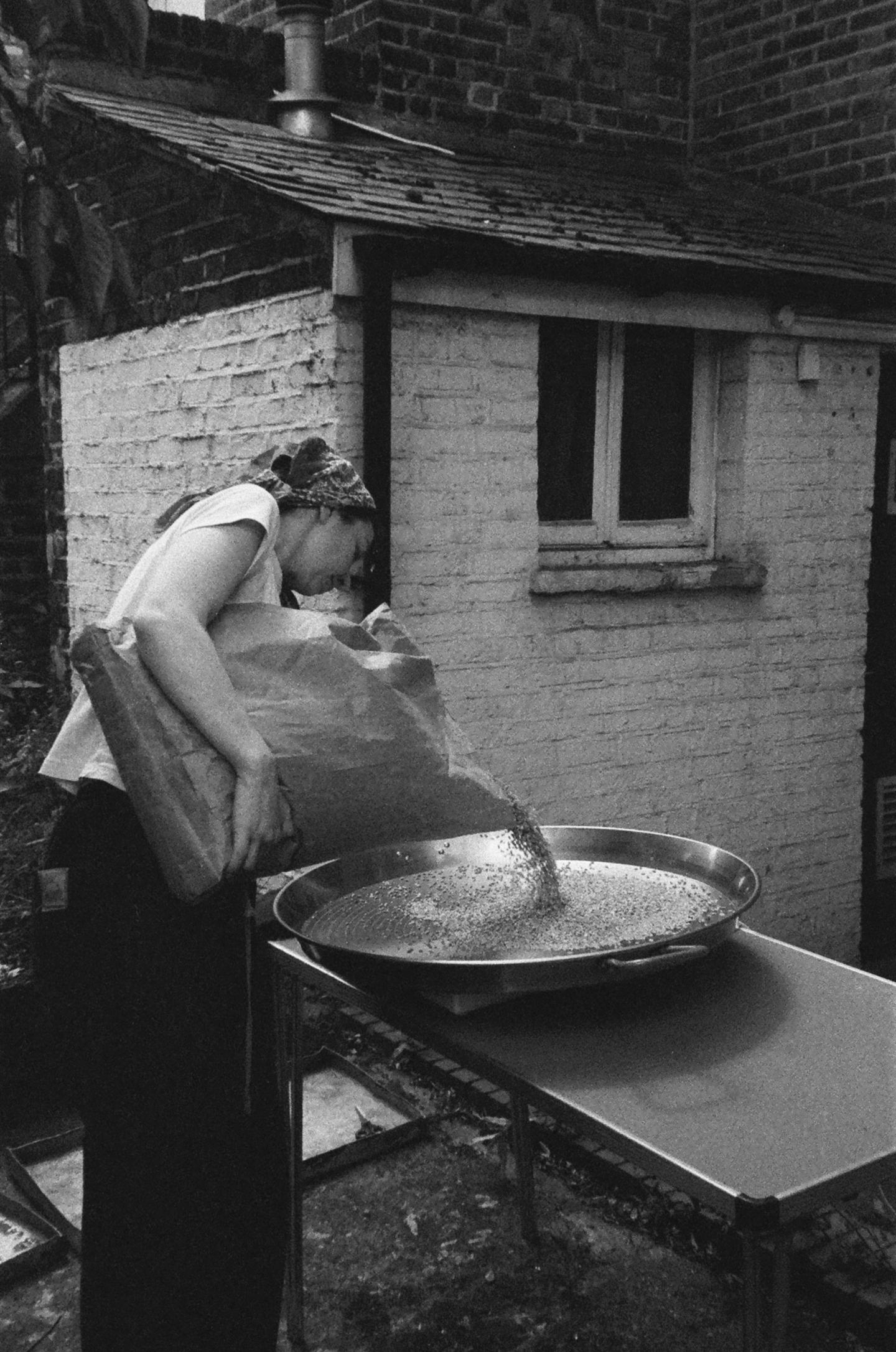
Images are taken from Adriana Gallo's project ‘A rude and undigested mass’, a work originally presented in 2025 examining commodity fetishisation, enclosure, adulteration, and the contingency of value anchored by the acquisition and presentation of a 19th French panetière or ‘bread cage’, a salesman’s model of a grain mill, and 15kg of wheat burnt by the artist. Images in order of appearance:
Production of ‘A rude and undigested mass’ 1, 2025. Photo by Daniel Padget
'A rude and undigested mass', 2025. Photo by Minu Han
Production of ‘A rude and undigested mass’ 2, 2025. Photo by Daniel Padget
—
'ISO Conviviality' is an original piece, commissioned by The Gramounce for publication on The Journal.
Adriana Gallo is an artist and researcher living and working in New York with roots in Milan and the Northeastern US. Her practice embodies and complicates ecologies of labor and outcomes take the form of installations, sculptures, texts, workshops, and meals.